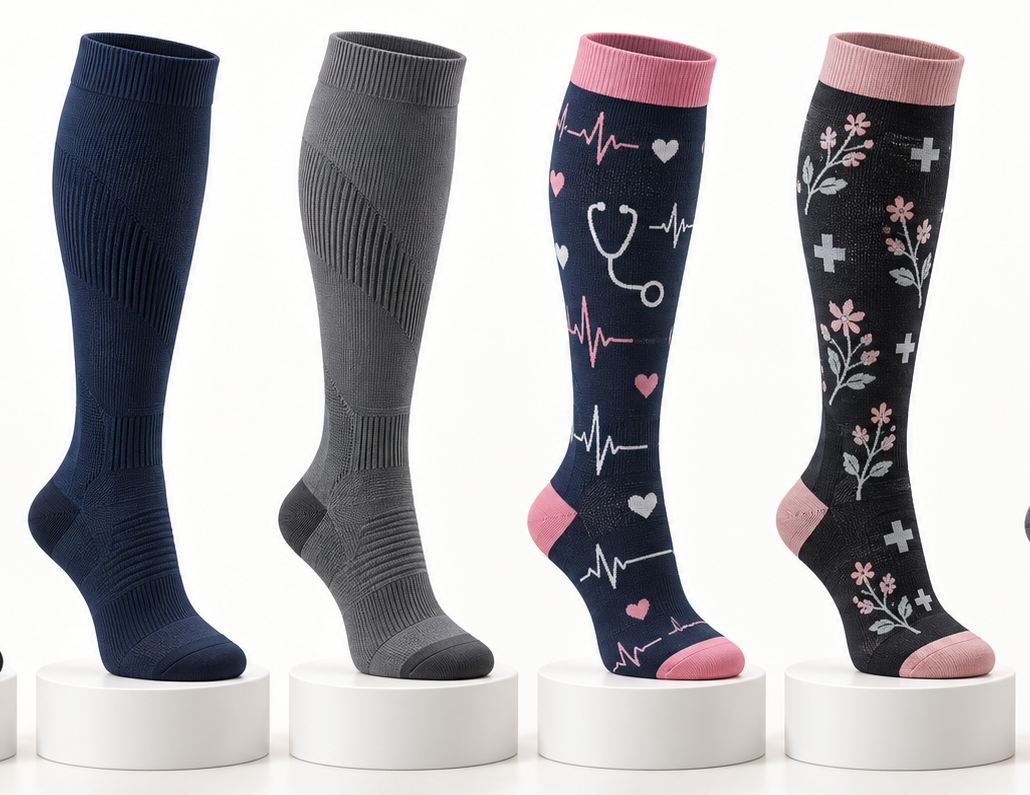
1. Start with the wearer, not a generic size label
A travel collection, a nursing-and-care program, and a performance range may all use a knee-high silhouette, but they do not begin with the same wearer profile. Before choosing a size architecture, define who the product is intended for, how it will be worn, the target market, and the footwear context. This gives the development team a practical starting point for the foot length, calf accommodation, cuff feel, and product presentation.
A buyer can then decide whether their range is best communicated through a compact retail size set, a more detailed fit system, or a market-specific format. The important point is to make the system understandable for the end customer and workable for the approved construction—not to copy a chart from an unrelated product category.
2. Treat the cuff, calf, ankle, heel, and toe as one fit system
Knee-high compression socks are shaped products. A size can look acceptable laid flat but still need adjustment when it is worn. The sample review should look beyond overall length and consider how the construction sits from cuff to toe.
- Cuff: Does it stay in the intended position without creating an unwanted edge feel?
- Calf and ankle zones: Do the support areas sit in the intended locations for the target wearer?
- Heel placement: Does the heel pocket locate naturally rather than pulling forward or back?
- Foot and toe: Is there enough length and room for the intended footwear and wearing experience?
- Visual zones: Do color blocks, logos, or patterned areas remain legible once the sock is worn?
3. Make the approval sample do real work
An approval sample is the best place to turn assumptions into useful feedback. Ask the reviewers to wear the sock as intended, record which size they tried, and comment on position, comfort, appearance, and ease of putting it on. If the product will be washed under the approved care instructions, include the agreed post-care review in the sample plan as well.
For a private-label project, keep the feedback attached to the exact approved version: material composition, knit construction, size label, colors, logo treatment, and intended packaging. That record gives both buyer and factory a clear reference before bulk production begins.
4. Keep the size story clear at retail
A sound product can still create avoidable returns if the size message is confusing. Put the buyer-approved size identifier in a visible, repeatable place on the sock program, label, hangtag, and packaging. If the program uses measurement guidance, units and instructions should remain consistent across every customer-facing item.
For patterned nurse, travel, or lifestyle collections, keep the product personality separate from the essential size information. A bright Jacquard motif can make the collection memorable; clear sizing still needs to be fast to find and easy to understand.
5. What to send in a sizing brief
A complete size brief shortens the path to a reviewable sample. It does not need to be complicated, but it should remove basic unknowns before development starts.
- Target wearer, use case, and intended sales market
- Requested sock style and planned size range
- Reference measurements or an existing approved product, when available
- Target material and compression program
- Size-label, hangtag, and packaging requirements
- The people or fit profiles that will review the sample
Bring the brief
Ready to make it sample-ready?
Fit, sizing, and communication should be approved as one system. Share the target wearer, proposed size range, and any reference product in your RFQ, and the factory team can help turn them into a sample-ready brief.