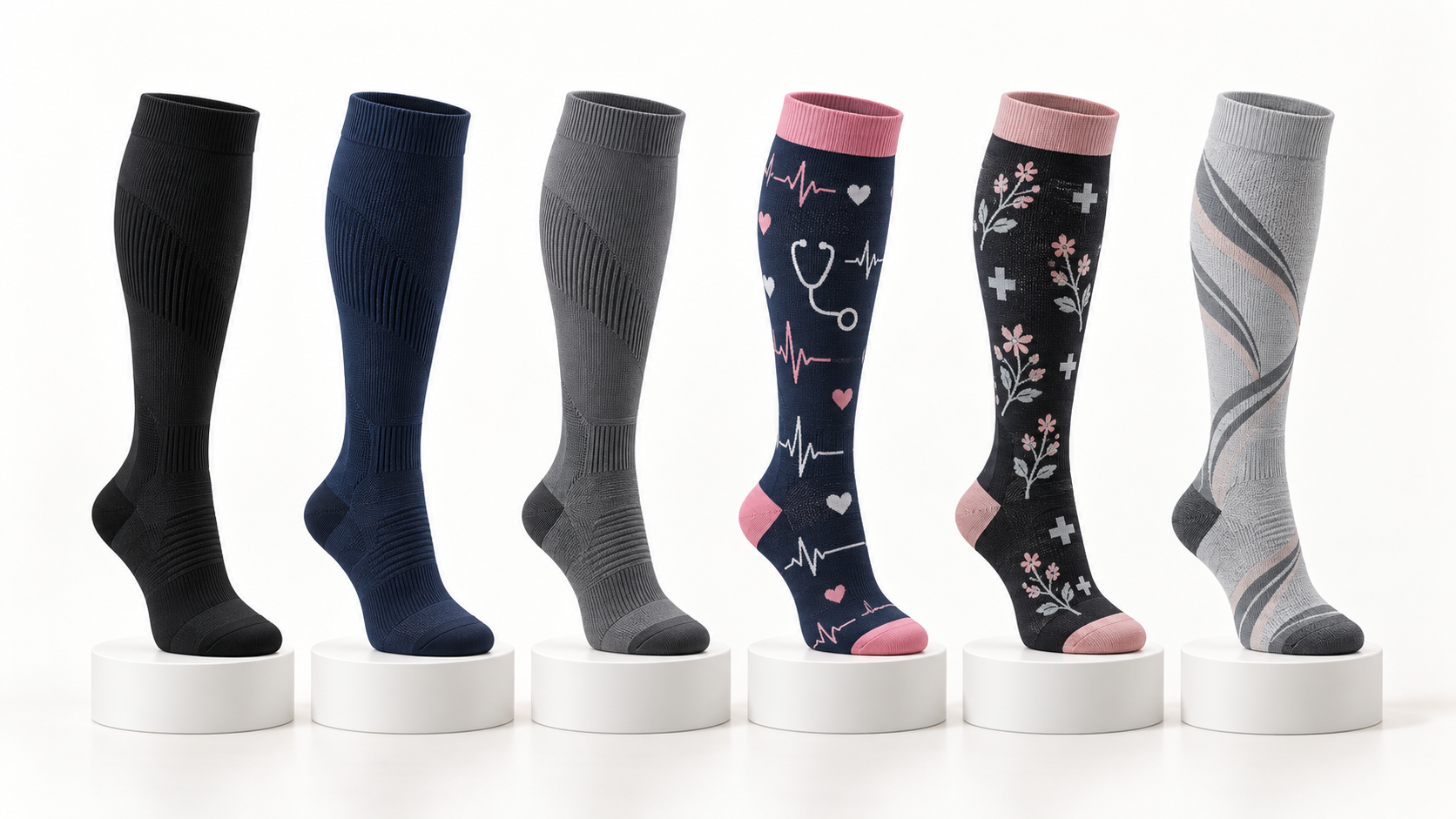
1. Separate the fiber claim from the product specification
A fiber name alone does not describe a finished compression sock. Two products can both contain nylon, polyester, bamboo-derived fiber, wool, or branded performance yarn while using different ratios, knit structures, weights, finishes, and compression constructions. For sourcing, the useful question is not only ‘Which fiber?’ but ‘Which approved composition and construction will be used for this exact style?’
Begin with the target market, wearer profile, intended use, size range, compression program, desired hand feel, care expectations, target cost, and packaging claim. The factory can then prepare a material direction that can be reviewed in a physical sample rather than promising performance from a fiber name alone.
2. Understand the declared stock blend
Our current stock compression sock blend is 65% nylon, 30% polyester, and 5% spandex. Nylon is the largest fiber component, polyester is openly declared, and spandex supports stretch and recovery within the approved construction. We do not present the polyester portion as nylon.
Polyester is not the problem when it is accurately specified. The buyer risk is an unclear or substituted composition that no longer matches the sample, label, product page, or customer expectation. Confirm the percentage breakdown in writing before ordering and keep that specification attached to the approved sample and bulk order.
- Record the full fiber percentages instead of using only a broad ‘nylon compression sock’ description.
- Confirm whether the quoted style is stock, modified stock, or a newly developed custom construction.
- Keep the approved composition consistent across production documents, labels, and sales copy.
3. Use custom fibers to build a distinct product direction
Custom yarn programs can help a brand create a collection for a particular season, price point, wearer, or retail story. We can develop compression sock directions using bamboo fiber, merino wool, or COOLMAX®, with the exact blend and construction confirmed during development.
Bamboo fiber may be considered for a soft, comfort-led brief; merino wool for a wool-based seasonal or outdoor direction; and COOLMAX® for a branded performance-yarn direction. These are development starting points, not automatic finished-product claims. The sample, care testing, target-market requirements, and any intended marketing statements should be reviewed for the final style.
4. Approve materials through a real sample
Evaluate the material as part of the complete knee-high compression sock. Review hand feel, opacity, stretch recovery, cuff feel, heel and toe construction, appearance when worn, care response, and how the yarn works with solid colors or Jacquard patterns. A yarn that looks right on a cone still needs to work in the approved sock structure.
If the program requires a specific fiber-content test, color standard, wash procedure, certification, or destination-market label, place that requirement in the brief before production. Agree on the responsible test method and acceptance record rather than assuming every custom yarn program follows the same route.
5. What to include in a material-development RFQ
A clear request helps the factory compare a stock route with a custom route and identify which decisions belong in sampling.
- Target wearer, sales channel, season, and intended use
- Sock style, compression direction, size range, and estimated quantity
- Preferred fiber or reference product, if available
- Required composition claim, care instructions, testing, or documentation
- Color, pattern, logo, label, and packaging requirements
- Target cost, sample deadline, and planned launch date
Bring the brief
Ready to make it sample-ready?
Send your current material idea, target market, compression direction, and estimated quantity. We can compare the declared stock blend with a custom bamboo fiber, merino wool, or COOLMAX® development route and define what should be approved in the sample.