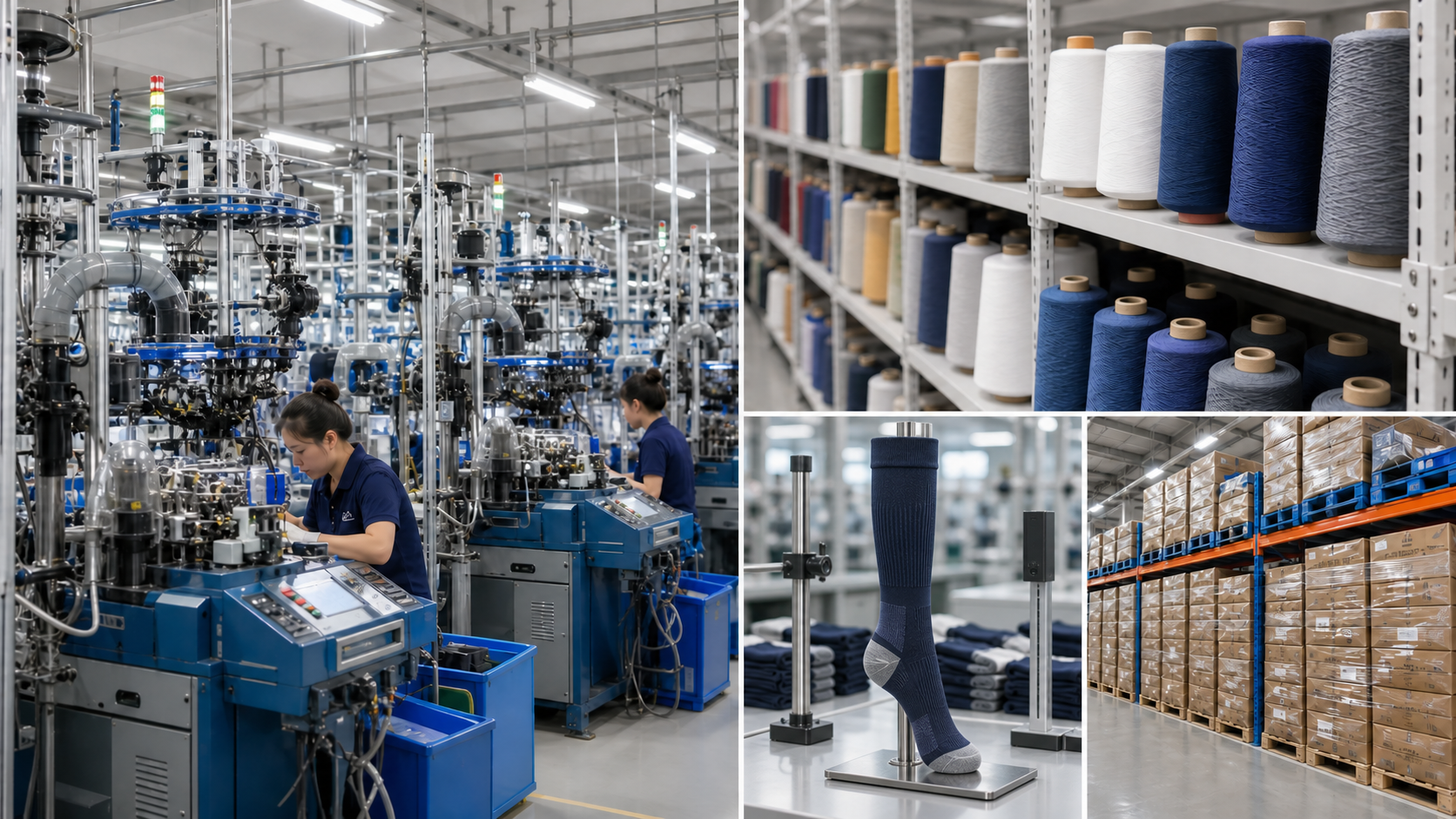
1. Lock the approved product before bulk starts
A reliable bulk check starts with a reliable reference. The approved sample, artwork, size range, material composition, construction notes, color direction, labels, and packaging should describe the same product. If a change is needed after approval, record it clearly and confirm whether another sample or sign-off is required.
For stock compression socks, the declared composition is 65% nylon, 30% polyester, and 5% spandex. Custom programs can be developed with buyer-approved fiber ratios, including bamboo fiber, merino wool, or COOLMAX®. In every case, the composition and label claim should match the approved specification; polyester is a valid fiber when it is accurately declared, not substituted or mislabeled.
2. Define the finished-product checks that matter
The exact inspection procedure and acceptable tolerances should be agreed for the program. However, most custom compression sock projects benefit from a shared checklist that covers the finished product rather than only the yarn or artwork file.
- Construction: cuff, support zones, heel, toe, seams, and overall knitting appearance align with the approved sample.
- Size and shape: agreed measurements and the intended shape are checked against the approved specification.
- Appearance: color consistency, visible marks, loose ends, pattern placement, and logo legibility are reviewed on the finished sock.
- Material and trim: declared fiber composition, labels, hangtags, and other approved components match the project brief.
- Pairing and assortment: size, color, left/right pairing where applicable, and quantity are checked before packing.
3. Give patterned and branded programs their own checkpoints
A custom Jacquard pattern needs more than a visual approval on a flat drawing. On the finished knee-high sock, review the scale and location of the motif around the calf, ankle, heel, and toe. A heart, stethoscope, capsule, team icon, or woven logo should read cleanly without disrupting the intended construction or becoming inconsistent between sizes.
Brand items should be treated as part of the product, not an afterthought. Confirm the approved logo version, size marking, care information, hangtag copy, barcode or SKU details, and packaging layout before the final packed-product review.
4. Inspect the product customers will actually receive
The final presentation includes more than the sock. Check the folded or paired product in its intended packaging: correct style, correct size identifier, correct colorway, required labels, and the agreed number of units per pack or carton. This is especially useful when one order includes several sizes, care patterns, or retail configurations.
If your sales market has specific labeling, testing, import, or claim requirements, include those requirements in the written brief and validate them with the appropriate local specialist. The factory can manufacture to the buyer-approved product specification; compliance obligations depend on the product claim and destination market.
5. Put the quality route into the RFQ
The most useful RFQs state how the buyer plans to approve the product. Include the requested compression program, material, size range, design files, label and packaging details, quantity by variant, sample sign-off process, and any required inspection or documentation points. That gives the production and quality teams the same route from development through shipment.
Bring the brief
Ready to make it sample-ready?
A clear specification protects both the product promise and the buyer relationship. Send your current specification or a simple list of requirements, and we can help identify what should be confirmed in the first sample and before bulk production.