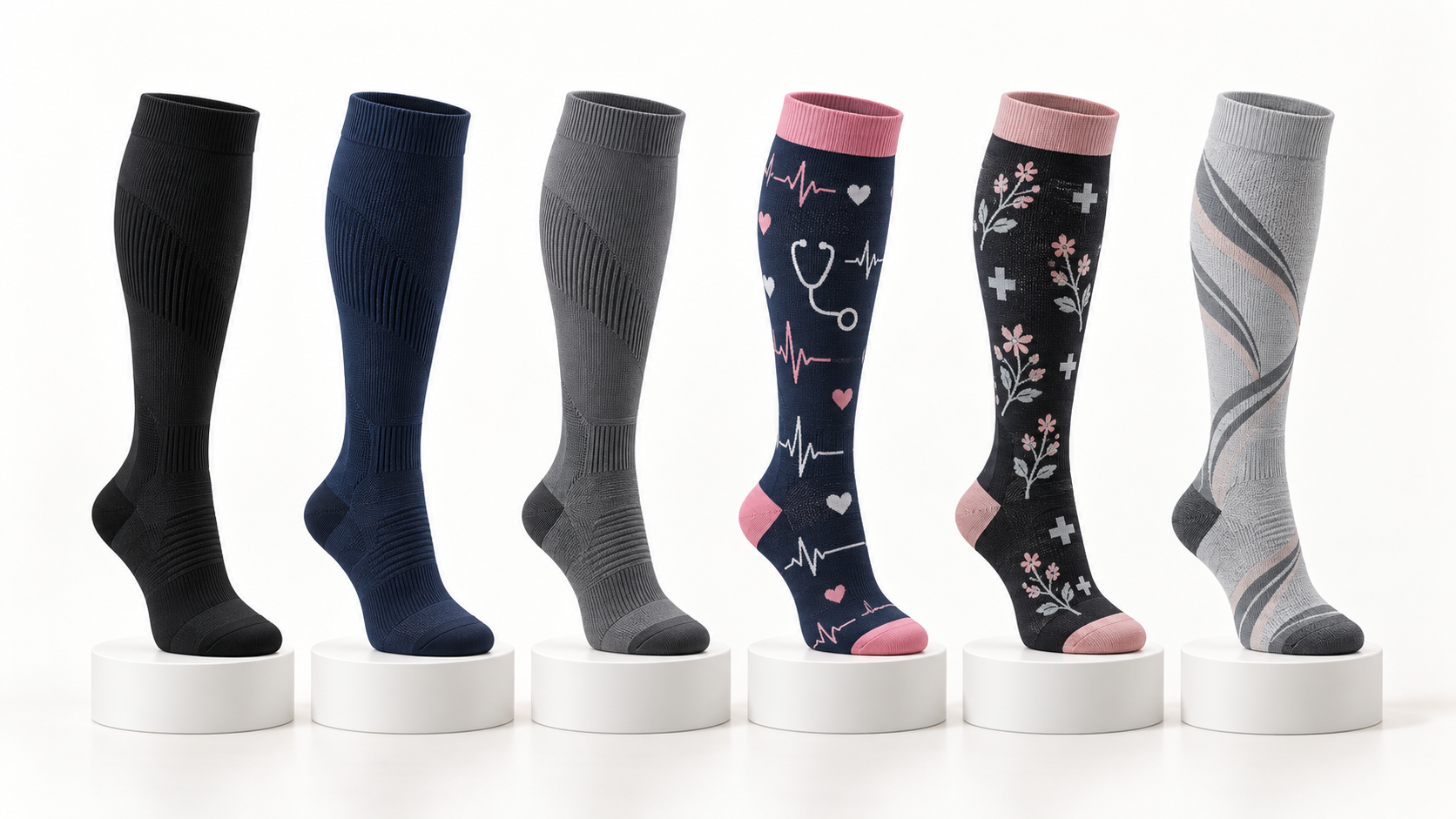
1. Understand what changes the MOQ conversation
A stock solid-color style with standard packaging follows a different route from a new construction with custom yarn, multiple Jacquard designs, several sizes, branded labels, and individual boxes. Each added variant can create separate setup, material, artwork, production, or packing requirements.
For a useful quote, identify what can remain common across the range. The same base construction, yarn direction, cuff, heel, toe, label, or package may support several designs and make the program easier to plan.
2. Build a variant matrix before requesting prices
List each intended size, color, pattern, compression program, logo treatment, and package. Then add the estimated quantity per variant. This reveals whether the concept is one product with a few designs or many separate products sharing a marketing name.
A matrix also prevents a misleading comparison between suppliers. One quote may describe a total quantity, while another requires a minimum for every color or design. Ask each supplier to state the unit on which the MOQ applies.
3. Use the sample to confirm the high-risk decisions
Sampling should focus first on construction, fit direction, material, support zones, motif translation, and logo legibility. Packaging artwork can be developed in parallel, but printing every packaging variant before the sock is approved can create avoidable rework.
If one base construction supports several patterns, approve the base and representative artwork carefully, then define what needs separate sampling for the remaining designs.
4. Ask what the sample and MOQ include
Clarify sample quantity, sample type, development fee, artwork work, packaging proof, courier cost, revision rounds, estimated timing, and whether the sample is made in the intended construction and material. For bulk, confirm whether the quoted MOQ includes mixed sizes, colors, or designs.
Also ask which assumptions could change the quote. A custom fiber program, new mold or tooling requirement, special test, low-volume printed box, or complex assortment may affect the route.
5. Prepare an MOQ-ready RFQ
A short, structured RFQ produces a more useful answer than asking only for the lowest minimum.
- Stock, modified stock, or fully custom program
- Compression direction, material, sizes, and total quantity
- Quantity by color, design, size, and package
- Logo, artwork, label, and packaging files
- Required testing, documentation, sample date, and launch date
Bring the brief
Ready to make it sample-ready?
Share the proposed assortment, even if the quantities are preliminary. We can identify which variants may share a development route and what should be sampled before a final MOQ and bulk plan are confirmed.